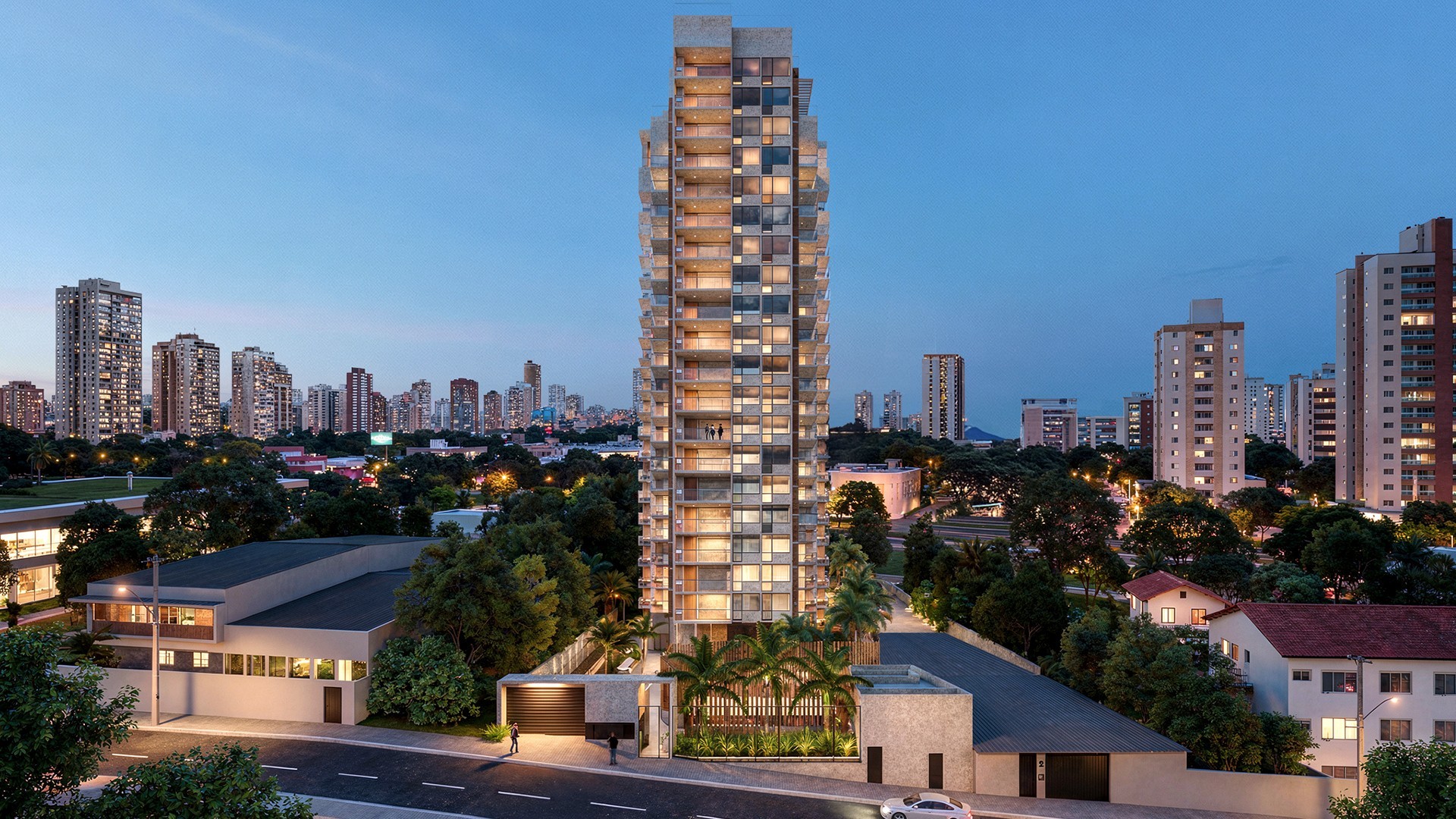
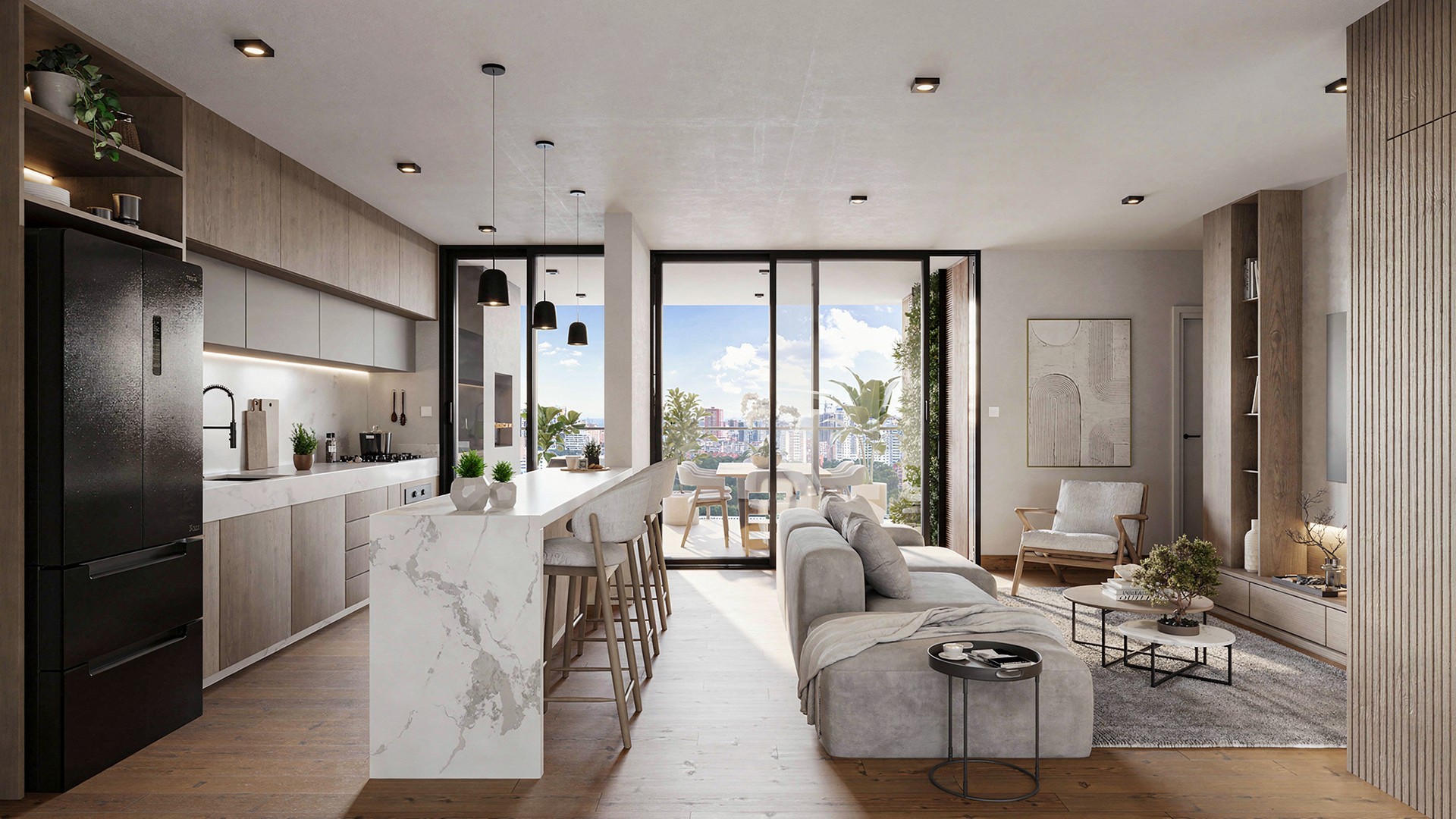
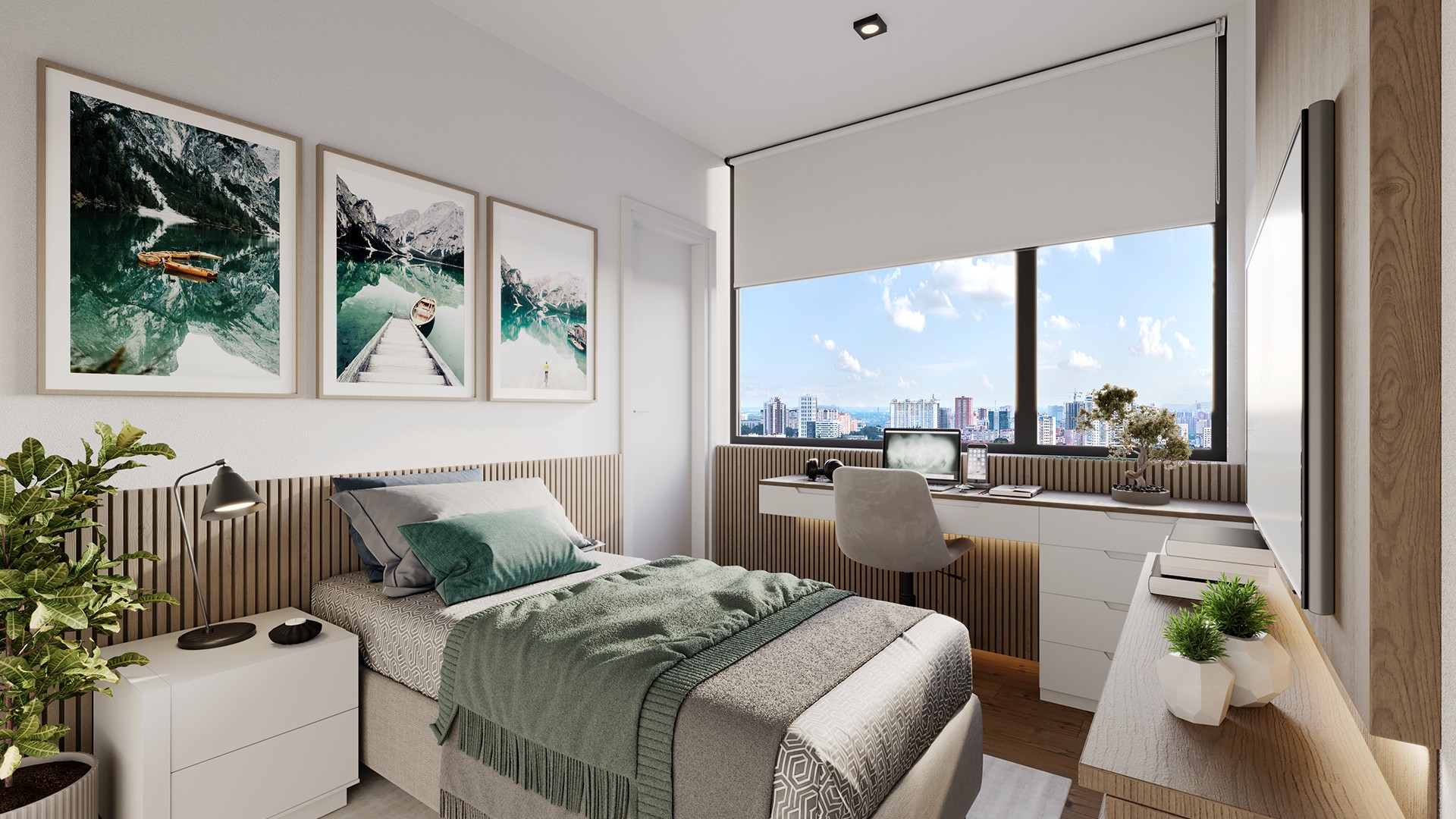
The residential development is located in the North Zone of São Paulo and was conceived from a careful reading of the land, the urban surroundings, and the contemporary needs of living well. The architectural proposal seeks to balance functionality, comfort, and the enhancement of space, resulting in a complex that dialogues with the city and improves the users’ experience.
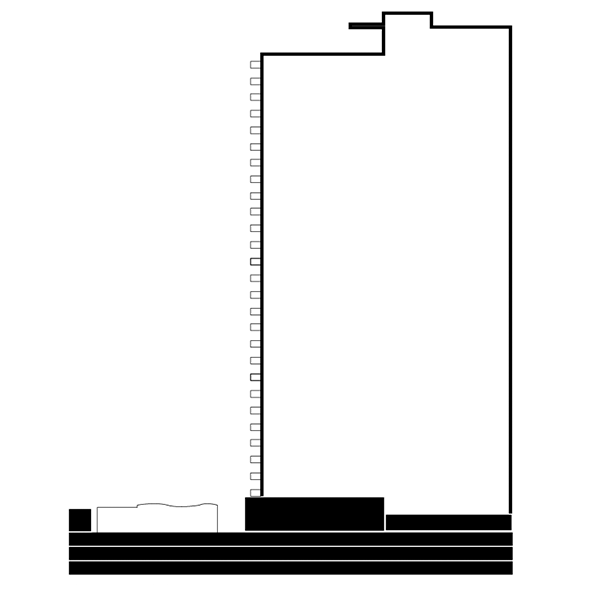
The topography of the land, with an approximate slope of nine meters, was used as a structuring element of the project, allowing for the implementation of three garage levels and leaving the ground floor level. This strategy made it possible to organize access, take advantage of the natural characteristics of the lot, and integrate the building into the urban landscape.
The positioning of the building is considered the best solar orientation, ensuring thermal comfort and natural lighting. In addition, the narrowness of the land would increase setbacks and could result in narrower units with long corridors. To respond to this characteristic, the building was positioned further back, freeing up the front portion of the lot for leisure and social areas.
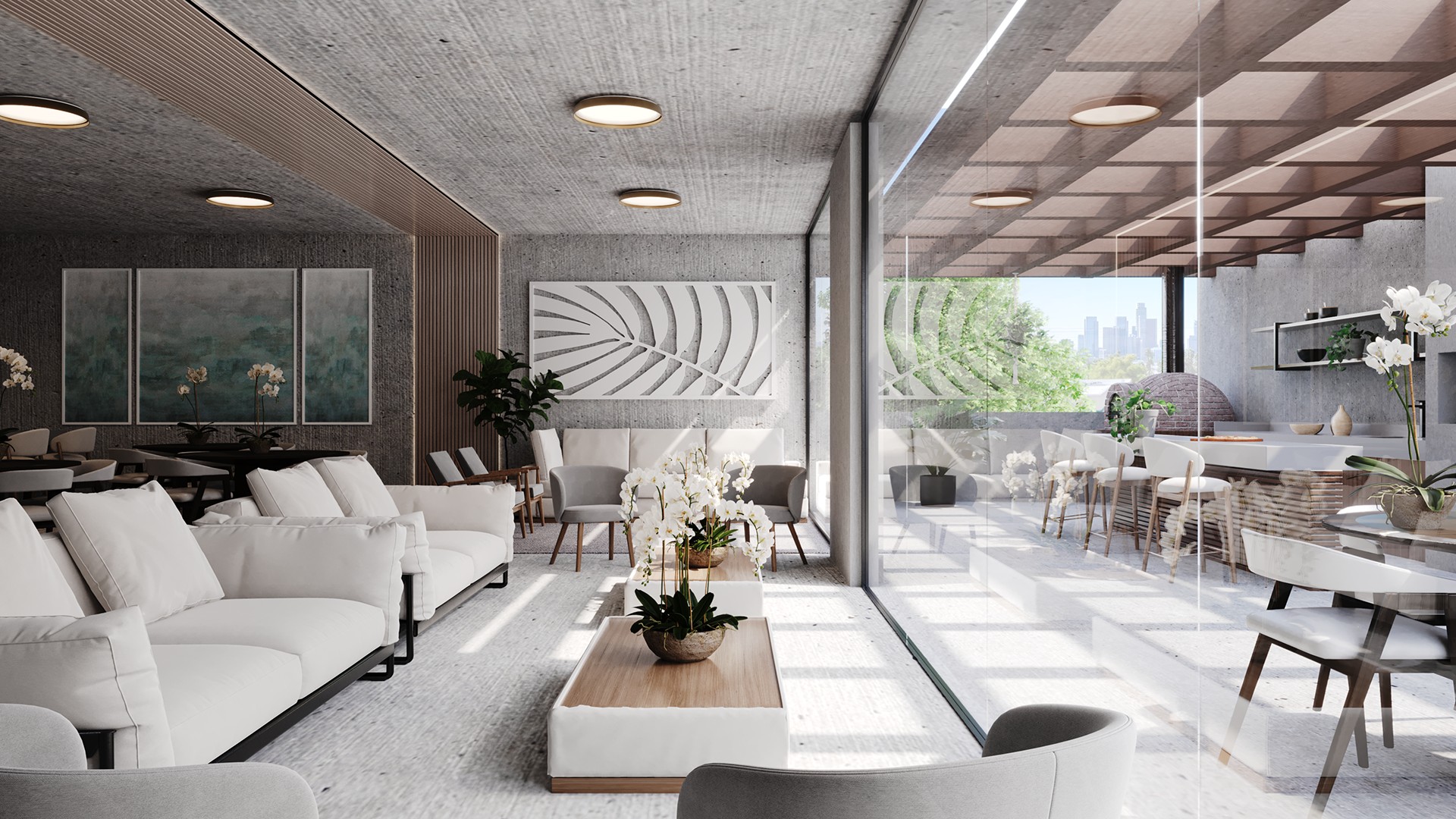
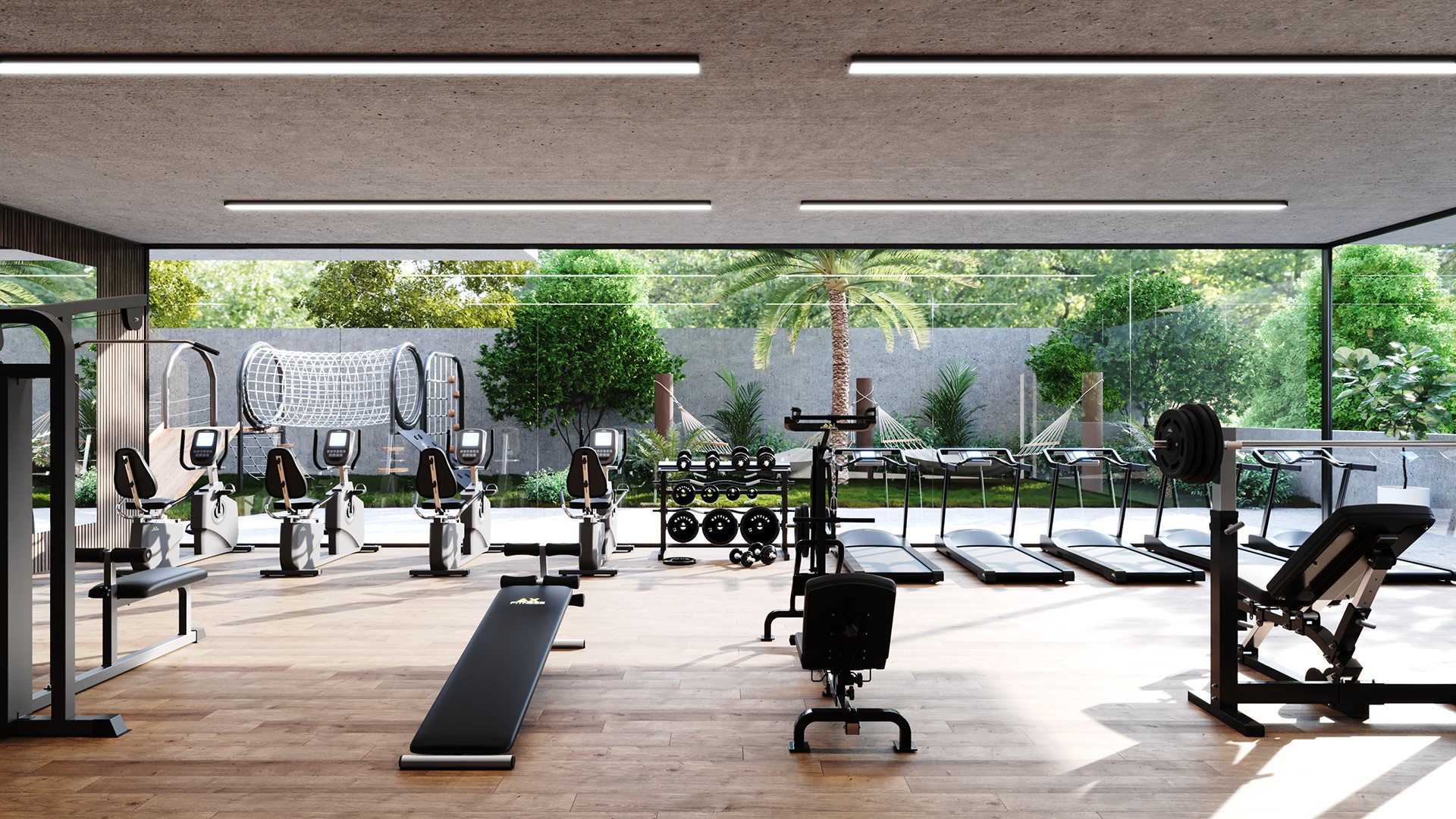
The ground floor was designed as a leisure space for residents, bringing together various environments that meet different needs and age groups. In addition to functioning as the main access, which makes the space constantly frequented and dynamic.
The project includes two sports courts, one of which is for beach tennis, coworking, spa, mini-market, two party rooms, barbecue, gym, playroom and games room. The landscaped outdoor areas and the hammock area provide moments of rest outdoors, creating an atmosphere that encourages interaction between residents and values well-being.
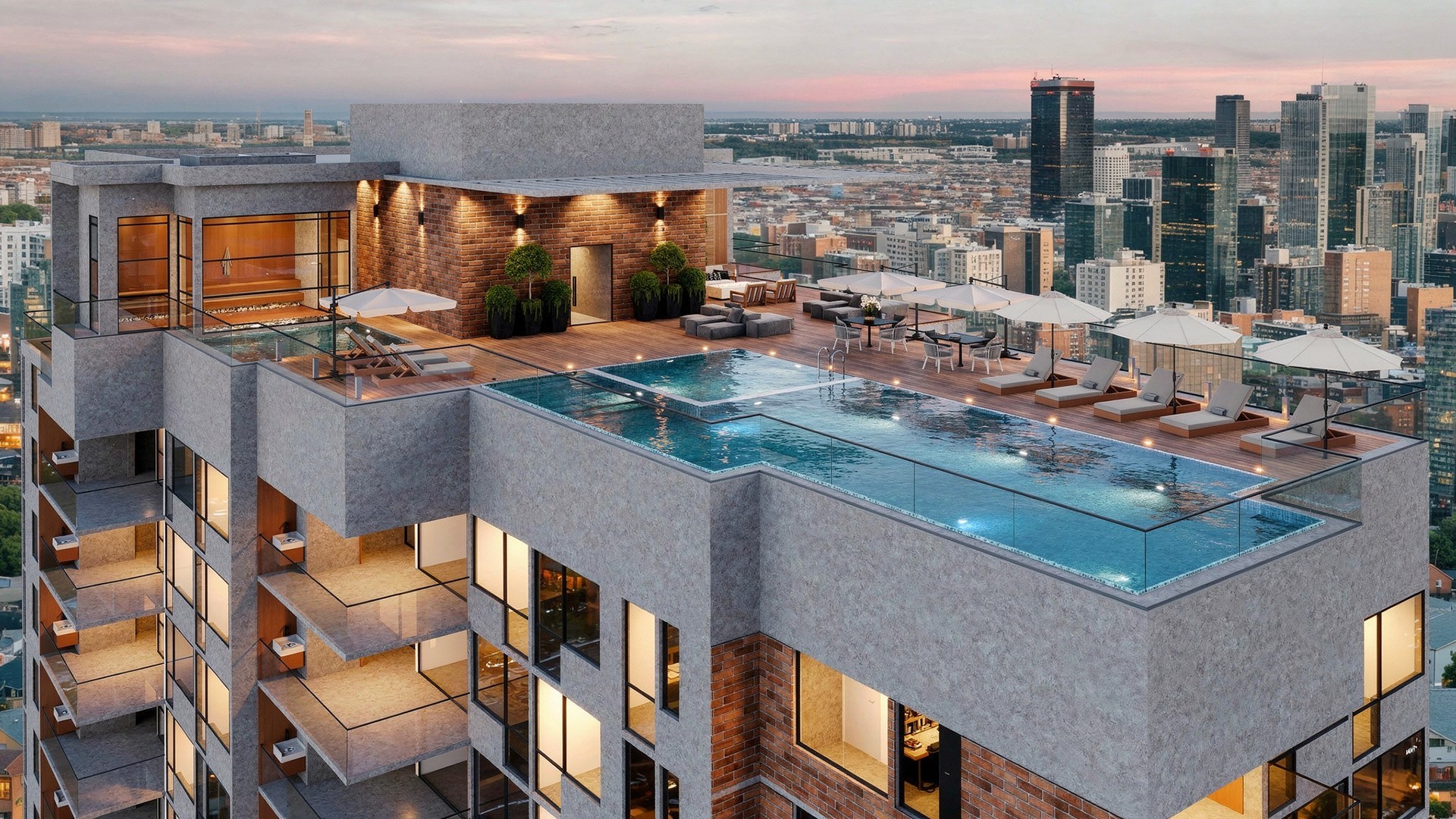
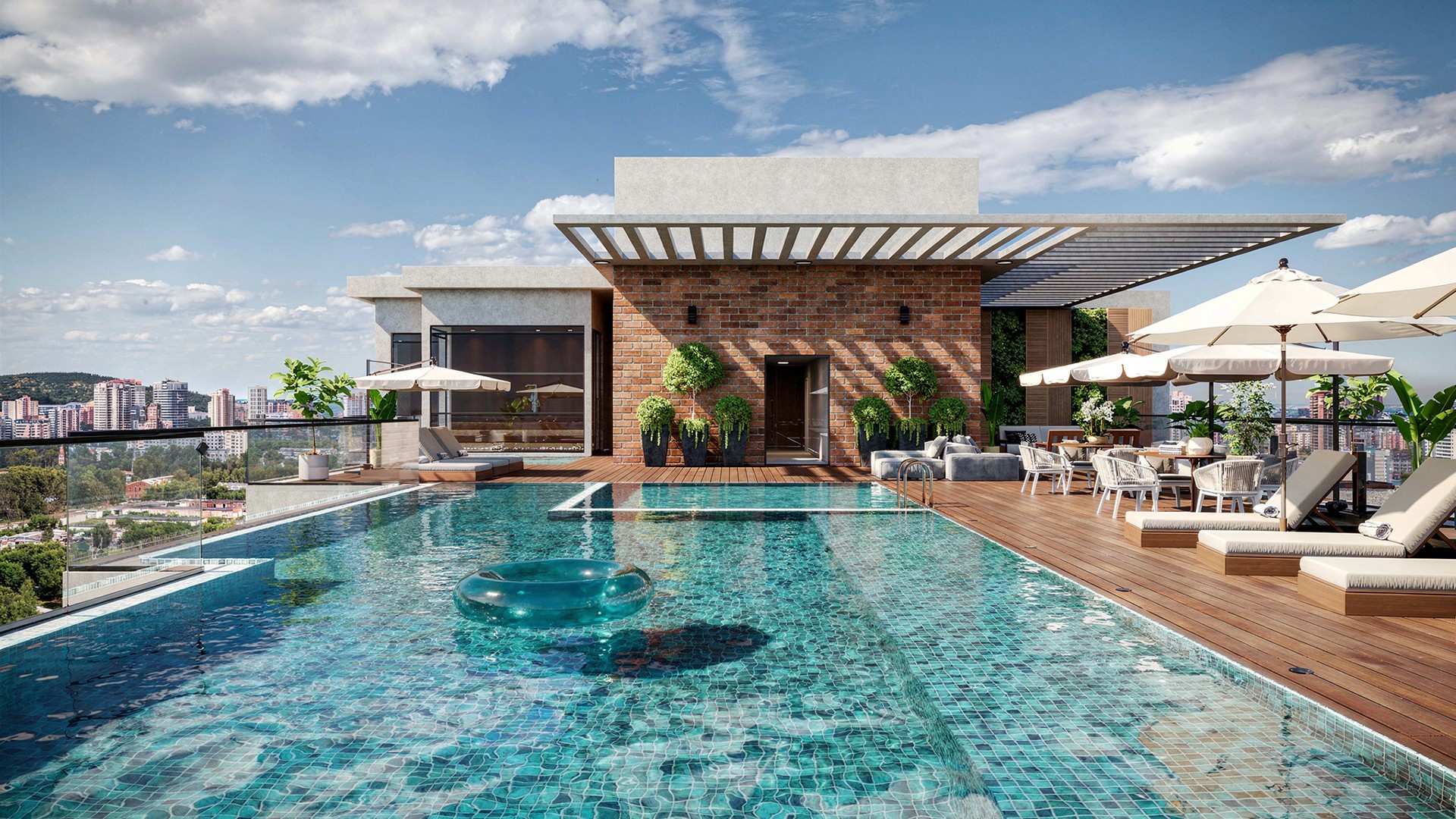
The residential floors house 139 units distributed in typologies of 80 m², 95 m², 110 m² and two duplexes of 210 m², catering to various resident profiles. On the rooftop, the project offers an exclusive leisure area, with swimming pools, sauna, open areas and a space with a fireplace. By concentrating leisure, services, and spatial quality in a single location, the development reduces the need for commuting and efficiently meets the demands of life in a metropolis like São Paulo.